
Singapore

Is global growth on the cards for CityDev?

Its overseas exposure sits at 45% of total assets.
Great Eastern’s net profit plummets by 56% to $96.9m
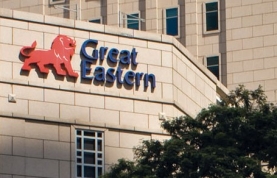
Blame it on unrealised fair value losses.
Parkway Life REIT’s profits jump 8.5% to $25.1m in Q1

Thanks to bigger yields from recently acquired assets.
Chart of the Day: Singapore redundancies count edging close to financial crisis levels

15,580 workers were laid off last year.
Mapletree Industrial Trust’s income inches up 0.1% to $50.4m in Q4

Thanks to contribution from its new data centre.
Daily Markets Briefing: STI down 1.37%

Expect muted gains today.
Daily Briefing: Singapore bets on rising Asia middle class; Consumer prices down in record slump

And Singapore takes the smart city to a new level.
Record-breaking deflation grips Singapore as housing, transport costs slide

Weak growth and low oil prices are also culprits. Singapore’s headline consumer price index (CPI) has been in the red for the past 17 months—the longest stretch of deflation ever recorded in the city-state, where consumer costs are kept in check by a potent combination of government policy and global price movements. Analysts note that a key reason behind Singapore’s negative inflation figure are weak transport and accommodation costs. Housing costs are kept muted by property cooling measures, while private road transport costs are on a downward slide due to the city-state’s unique Certificate of Entitlement (COE) system. “With the excess supply in housing stock and the associated downward pressure on rentals, the housing CPI index may continue to fall. In addition, the Land Transport Authority has announced an increase in the quota for the certificates of entitlement for vehicle ownership. This means a possible decline in private transport costs. Coupled with low energy prices, a significant portion of the CPI basket will remain in the negative,” DBS Vickers said in a report. Apart from domestic policies, weak global growth is also acting as a drag on local inflation. “The growth slowdown has further compounded the disinflationary pressure. And this will likely become more pronounced in the coming months with the overhanging risk of a technical recession,” DBS added. Although this is the longest deflationary period ever recorded, analysts say that the current downtrend has key differences from previous periods of deflation. “Even though headline prices had been contracting for 17 consecutive months, the longest on record, we hesitate to label the current situation as a “deflationary spiral”, as the decline in prices were largely due to administrative measures applied on accommodation and private road transport costs,” said UOB economist Francis Tan. A key difference is that unlike during the 2008/09 financial crisis, where core inflation fell for 9 consecutive months due to a lack of consumer demand as well as corporate/business price-cutting in the aftermath of the global financial crisis, core inflation remains positive at present. “[During] the current period of slower economic growth, Singapore’s core inflation had not contracted at all. Indeed, with global consumer price actions remaining subdued due to the downward pressures on the prices of major commodities as well as manufactured products, Singapore, being a price-taker, will continue to see weak inflation trend as we go into 2016,” Tan noted. The Monetary Authority of Singapore had also projected lower trends in both the headline and core inflation for 2016. “Despite the fact that core inflation is expected to remain in positive territory, it is likely to fall below expectations and below the central bank’s target of 2.0% in the medium-term,” DBS noted.
SGX teams up with China Construction Bank to attract more Chinese listings

Both direct and secondary listings are on target. The Singapore Exchange (SGX) has inked a memorandum of understanding (MOU) with China Construction Bank (CCB) to promote domestic capital markets to Chinese companies. Under the MOU, SGX and CCB will collaborate to bring Chinese companies to list in Singapore, especially through SGX’s Direct Listing Framework. CCB is among the issue managers accredited by SGX to assist companies in raising capital on the exchange. As part of the MOU, it will also advise its SGX-listed clients looking to tap the secondary market for further fund-raising. The MOU will also encourage Chinese companies to issue offshore Renminbi bonds , undertake mergers & acquisitions, establish cross-border asset management services and other capital market activities in Singapore. In addition, CCB will explore derivatives trading, bond trading and other business activities in Singapore. There are currently 120 Chinese companies and 103 RMB bonds listed on
Inflation books 17th straight month of contraction with 1% fall in March

On back of hefty decline in transport costs.
Over 4 in 10 Singaporeans are disgruntled with residential market: survey

Expensive prices are a top concern.
Singapore Tourism Development Fund to get $700m boost from 2016 to 2020

It's to aid the local tourism sector's transformation.
Bumitama Agri’s FFB yield plummets 24% to 3.1t/ha

Last year’s El Nino is still hurting output.
Marco Polo gains stay of proceedings in legal battle with Sembcorp Marine unit

Arbitration proceedings have already commenced.
SGREIT’s earnings jump 7% YoY to $41.6m in Q3

Thanks to Myer Centre Adelaide’s contributions.
Raffles Med’s Q1 profits inch up 3.7% to $15.5m

On back of increased staff expenses.









 Read Here
 Advertise
 Sign Up


