
Singapore

3 reasons why CapitaMalls Asia's Wuhan mall is a genius move
The $128.4m site is really worth it.
Marina Bay Sands, Resorts World Sentosa slapped with $230,000 fine

See what rules they allegedly violated.
Why Singapore companies flock abroad for greener pasture
The year 2012 showed a clear reflection of the general climate of economic and political uncertainty as reported in the BDO Ambition Survey 2012.
Check out this 'slight blip' in Ascendas REIT's robust results

It's a tad 0.3ppt slippage.
High time for Singapore shipping sector to get more techie
The global shipping and ocean freight industry is set to face a fourth year of challenging business conditions as weak demand for goods and services continue to afflict the world’s economy.
Changi Airport targets 85mn passengers once T4 opens by 2017

Learn why it’s not resting on its laurels just yet.
Home sales surge an excellent 123%

How will the latest cooling measures affect this?
Losers weepers: Singapore Airlines to lag regional peers

Even as December load factor hit 82%.
SGX's derivatives clearing fees to surpass securities'

Expect a S$74.3m profit in 2Q13.
21% interest in Orchard Towers up for grabs

The tender exercise will close on 27 February 2013.
Mun Siong Engineering inks maintenance deal with JAC
It's a 32-month long contract.
4 reasons why the industrial cooling measures will have minimal impact on landlords

The policy intent is targeted at speculators.
Chart of the Day: Retail sales down
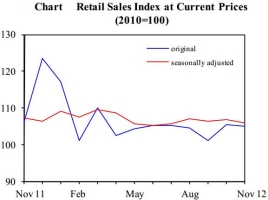
No thanks to lower sales in motor vehicles.
How Singapore salespeople can detect if the customer is bluffing
So you are negotiating with your customer (or adversary) for an important deal. Somehow, you feel that your adversary may be hiding something from you, or worse, giving you false information. In many books about body language, there are various ways to tell if the person in front of you is lying such as shaking their heads while saying "yes", or not maintaining eye contact. However, studies from acclaimed psychologist Paul Ekman , you don't just read body language or facial expressions to see if your adversary is lying to you. You need to first establish a baseline. The "baseline" is a set of stress-free questions that you know your adversary will be saying the truth. Things like "isn't it hot today?", or other mundane issues. If your adversary looks at their toes while giving you some very direct answers, or he covers his mouth even when asked about the most obvious question, perhaps he's not lying when he displays such actions during your negotiations. The key to spotting if someone is lying or hiding something is when your adversary's facial expressions, voice tonality, words or body language displayed a sudden change, especially when a stressful topic is being raised. Below is an example: Seller: so you are saying that your budget is tight, and you need us to give you a discount. Is that right? Buyer: Yes! Seller: well if you can guarantee a certain minimum quantity per year, I'm sure we can do something about price. Is a minimum of 4 shipments a year something you can commit to? Buyer: That should be OK for us. Seller: So can the first shipment start from early next month? Buyer: Err....that, that should be achievable. In the above conversation, the buyer started out very confident when asked if he wants to have a discount. However, when asked further if he could commit to a minimum quantity, he became less confident by saying "should be". When pushed on a start date, he became even more unsure of himself. Assuming if the Buyer in this scenario had been maintaining eye contact, and when asked if he could make a minimum commitment, he suddenly avoided eye contact, that's a sign of hiding something. And when asked to make the commitment within a deadline, in addition to sounding unsure, his lips curled and there was some signs that he was being uncomfortable, it's a clear sign that he's saying something that he has no clue. Still, there are no guarantees that even when someone changes their behaviours or postures when asked stressful questions, that person is lying. We can only say we suspect that person withholding something or displaying signs of discomfort. We can't say for sure that person is lying.
SIA Engineering poised for growth in 2013

Thanks to its growing non-SIA customer base.
Greenback trades towards lower end of USD/SGD range
US debt ceiling woes are forecast to greatly affect risk sentiment.
ST Aerospace bags maintenance deals with Royal Air Force of Oman
Amount is yet to be revealed.










 Read Here
 Advertise
 Sign Up


